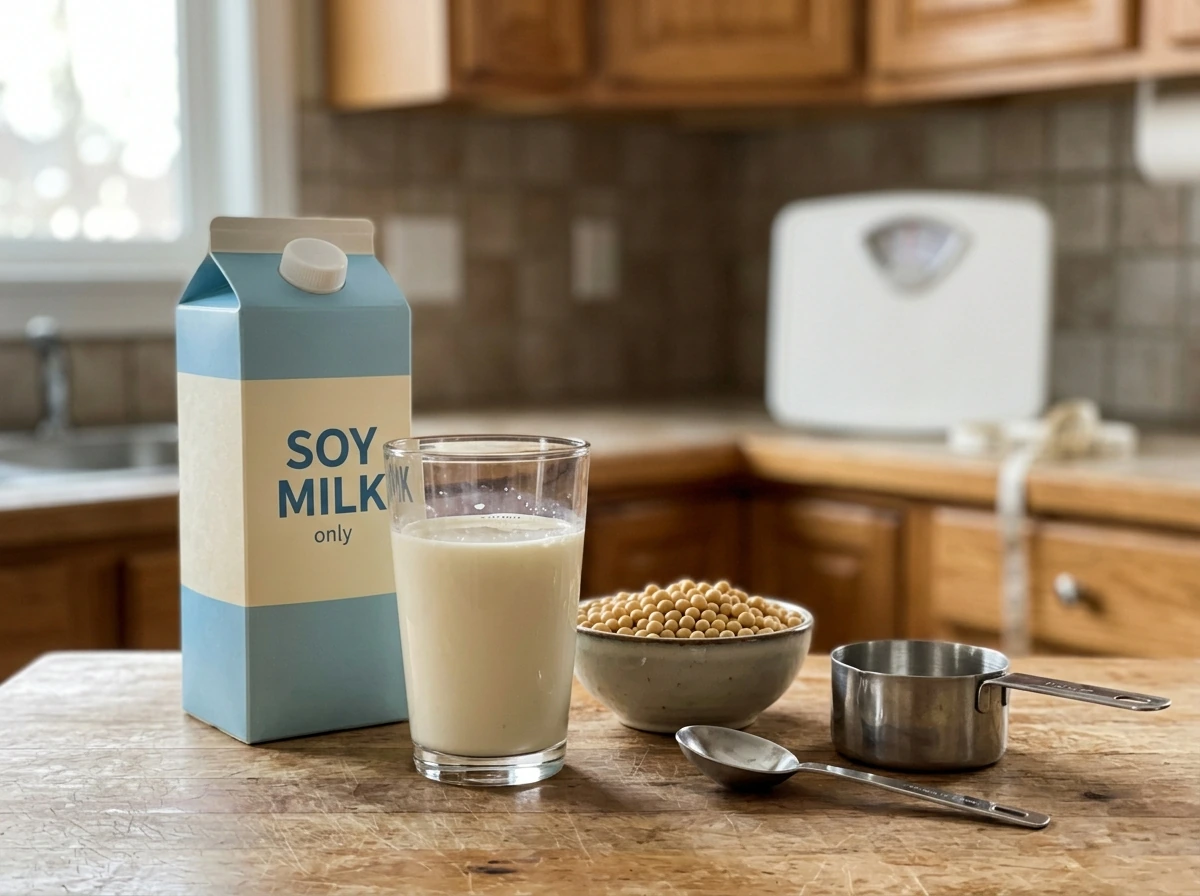
If you are a child or teenager whose growth plates are still open, and soy milk helps you reliably hit your protein, calcium, and vitamin D targets when dairy is off the table (due to allergy, intolerance, or preference), then it plays a legitimate supporting role in your overall growth nutrition. If you are an adult whose growth plates closed years ago, no amount of soy milk, dairy milk, or any other food will add a centimeter to your frame. The biology simply does not work that way.
What actually controls how tall you grow

Height is primarily determined by genetics. Your midparental height (calculated from your parents' heights) is the strongest predictor of how tall you will be, accounting for roughly 60 to 80 percent of the variation in adult stature. Nutrition, sleep, and general health fill in the remaining gap, but they cannot push you significantly past your genetic ceiling. They can, however, prevent you from falling short of it.
The physical mechanism of height gain is growth plate activity. Growth plates are thin layers of cartilage located near the ends of long bones (the femur, tibia, humerus, and others). When these plates are active, specialized cells called chondrocytes proliferate and then calcify, lengthening the bone. This process is tightly controlled by the growth hormone and IGF-1 axis, thyroid hormone, and sex hormones. During childhood, prepubertal linear growth runs at a relatively constant velocity of about 5 to 6 centimeters per year, with a brief slowdown just before puberty begins. Then the pubertal growth spurt hits, driven by a surge in sex hormones and growth hormone, pushing annual growth rates as high as 8 to 12 centimeters per year.
Here is the hard limit: estrogen (produced in both males and females during puberty) is the primary hormone responsible for closing growth plates. Once the plates fuse, linear bone growth stops permanently. No nutrition strategy, supplement, or beverage can reopen them. For most people, plate closure happens somewhere between ages 14 and 16 in girls and 16 and 18 in boys, though the timing varies. This is why everything that follows about diet and growth only applies while the plates are still open.
What soy milk actually brings to the table nutritionally
Among plant-based milks, soy is nutritionally the closest to cow's milk, which is why it is the only plant-based beverage included in the dairy category of the US Dietary Guidelines. A cup of unsweetened fortified soy milk delivers roughly 6 to 7 grams of protein and about 301 milligrams of calcium. If it is fortified (and you should always check the label), it also provides vitamin D, typically around 100 IU per cup. Those three nutrients, protein, calcium, and vitamin D, are the ones most directly tied to bone growth and density during childhood and adolescence.
Protein matters because bone is partly a protein matrix, and growth requires a steady amino acid supply for new tissue. Soy protein is a complete protein, meaning it contains all nine essential amino acids, which puts it a step above most other plant-based milks like oat or almond. Calcium and vitamin D are essential for the mineralization of new bone laid down at the growth plate. Without adequate calcium, newly formed cartilage cannot calcify properly into solid bone. Without vitamin D, calcium absorption from the gut drops sharply.
There is also some research suggesting soy intake may modestly increase circulating IGF-1 levels, the hormone directly responsible for stimulating growth plate activity. A meta-analysis of clinical trials found this association, though the effect size depends on dose, duration, and the individual's baseline health. This is biologically interesting but far from a guarantee that drinking soy milk will push the needle on height. It adds plausibility to soy's potential role in supporting growth biology rather than proving a direct cause-and-effect relationship.
Fortified vs. unfortified: it actually matters

Not all soy milk is created equal. Unfortified soy milk can be low in calcium and vitamin D, or contain none at all, depending on the brand and processing. The FDA requires that fortified soy beverages list protein, calcium, and vitamin D on their Nutrition Facts labels. If you are relying on soy milk to cover growth-relevant nutrients, specifically choose a fortified version and verify those numbers on the label. A product with 300 mg of calcium and 100 IU of vitamin D per cup is doing real nutritional work. One with 60 mg of calcium and no vitamin D is not a functional substitute for dairy in a growth-focused diet.
The myths: what the evidence actually says
The biggest myth around soy milk and height is that it contains phytoestrogens (specifically the isoflavones genistein and daidzein) that could boost growth. The logic goes: estrogen-like compounds might stimulate growth plates the way real estrogen does during puberty. The problem is that the same estrogen signaling that drives the pubertal growth spurt also accelerates growth plate closure. Chronically elevated estrogenic signaling does not make you taller; it actually shortens the growth window. The phytoestrogen concentrations in a typical serving of soy milk are far lower than those in clinical studies examining estrogenic effects, and direct evidence that soy milk phytoestrogens meaningfully alter height trajectory in children is not established.
A second common assumption is that because milk (dairy) is associated with height in some populations, a milk-like beverage must have the same effect. The data does not support this cleanly even for dairy. A large analysis of American children from NHANES found no significant effect of cow's milk on height after controlling for age, energy intake, and ethnicity. A meta-analysis of randomized controlled trials on milk and growth in children aged 6 to 18 reported inconsistent effects across studies. The honest read of the evidence is that milk, soy or dairy, supports growth when it helps you meet total nutrient needs, not because it has some unique height-boosting property.
On the flip side, two cohort studies (one Canadian, one examining children ages 1 to 10) found that higher consumption of plant-based milks, including soy, was associated with slightly lower height compared to cow's milk drinkers. This likely reflects the nutritional differences between products rather than anything inherently growth-suppressing about soy. Children consuming plant milks may have lower total protein and calcium intake if those milks are unfortified or nutritionally incomplete. The takeaway is not that soy milk stunts growth but that substituting it for cow's milk without attention to the overall nutritional picture could leave gaps.
Who might actually benefit, and who won't

| Who | Growth plates | Can soy milk support growth? | Notes |
|---|
| Young children (ages 1-8) | Open, active | Possibly, if fortified and diet is otherwise nutrient-poor | Check label; monitor total protein and calcium intake |
| Adolescents in active growth spurt | Open, actively closing | Yes, as part of a complete diet | Most critical window; total calorie and protein needs are high |
| Teens post-puberty (plates nearly fused) | Closing or closed | No height benefit; bone density still matters | Focus shifts to peak bone mass, not height |
| Adults (plates fully closed) | Closed | No height benefit whatsoever | Soy milk is fine for overall nutrition, not for height |
| Lactose-intolerant or dairy-allergic children | Varies by age | Yes, as a dairy substitute if fortified | Best plant-based nutritional match for dairy |
The window where nutrition matters most for height is childhood through mid-adolescence, particularly during the pubertal growth spurt. This is when energy and protein demands spike sharply. A teenager growing 10 centimeters per year needs significantly more total calories, protein, and calcium than they did at age 8. If soy milk helps an adolescent who cannot or does not consume dairy reliably hit those targets, it is doing exactly what it should. If an adult drinks it hoping to add height, it will not help with that specific goal, though it remains a perfectly decent nutritional choice for other reasons.
How to use soy milk practically if you are focused on growth
Soy milk works best as a reliable nutrient delivery vehicle within a balanced diet, not as a standalone height strategy. Here is how to make it count.
- Always choose fortified: Look for at least 280 to 300 mg of calcium, 100 IU of vitamin D, and 6 to 8 grams of protein per cup. These are the numbers that make soy milk nutritionally comparable to cow's milk for growth-relevant purposes.
- Treat it as one source among many: One to two cups per day can contribute meaningfully to calcium and protein needs, but should not be the only source. Pair it with other protein-rich foods (eggs, legumes, lean meat or fish if applicable) and calcium-rich vegetables like broccoli and kale.
- Use it in contexts where it actually gets consumed: Smoothies, oatmeal, cereal, and cooking sauces are all solid ways to incorporate soy milk for children or teens who are resistant to drinking it plain.
- Match intake to total calorie needs: During adolescent growth spurts, calorie requirements can reach 2,200 to 3,000 calories per day or more depending on activity level. Soy milk alone covers only a fraction of this. Do not let optimizing one drink distract from the bigger picture of overall energy intake.
- Unsweetened over sweetened: Sweetened varieties add sugar without adding growth-relevant nutrients. For children consuming multiple cups daily, the sugar load of flavored soy milk adds up quickly.
Beyond diet, the factors that have the clearest evidence for supporting height potential during active growth years are sleep and physical activity. Growth hormone is secreted in pulses, with the largest pulse occurring during slow-wave (deep) sleep, typically 60 to 90 minutes after falling asleep. Children and adolescents need 8 to 10 hours of quality sleep per night, and consistently cutting that short suppresses the very hormonal environment that drives growth plate activity. Weight-bearing physical activity (running, jumping, sports) stimulates bone formation and helps optimize the mechanical environment for growth. Neither of these is optional if you are serious about reaching your height potential.
When to stop reading articles and talk to a doctor

If you are here because you or your child seems noticeably shorter than peers, that concern deserves more than a nutrition article. Dietary adjustments are not a substitute for medical evaluation when growth is genuinely abnormal.
The clinical threshold for concern is height below the 3rd percentile (roughly 2 standard deviations below the mean for age and sex), or a growth rate that is clearly slower than expected for the child's age and pubertal stage, even if absolute height is not yet that low. Both situations warrant a pediatrician visit. From there, the standard workup typically involves plotting serial heights on CDC or WHO growth charts, calculating estimated adult height against midparental height, getting a bone age X-ray (left hand and wrist), and targeted lab work such as thyroid function tests and celiac screening, with referral to a pediatric endocrinologist when indicated.
The reason this matters is that some causes of slow growth are treatable. Hypothyroidism, for example, is correctable with thyroid hormone replacement, and catching it early can meaningfully preserve growth potential. Growth hormone deficiency is diagnosable and treatable. These are not nutritional problems, and no amount of fortified soy milk will address them. If growth velocity is normal and the child is just on the shorter side of the normal range, blood tests are rarely useful and reassurance is often the appropriate response.
If you are an adult asking about height, the realistic conversation shifts entirely. Growth plates are closed, height is set, and the focus appropriately moves to bone density, overall nutrition quality, and posture-related factors that affect how tall you appear rather than how tall you are. Soy milk can absolutely be part of a bone-healthy diet at any age. It just will not change the number on the measuring tape.
The bottom line: drink fortified soy milk if it fits your diet and helps you meet nutritional needs during growing years. Prioritize sleep, eat enough overall calories, stay active, and if growth looks genuinely off-track, get it checked medically rather than trying to nutrition your way out of a potentially hormonal or genetic issue. That is what the evidence actually supports.