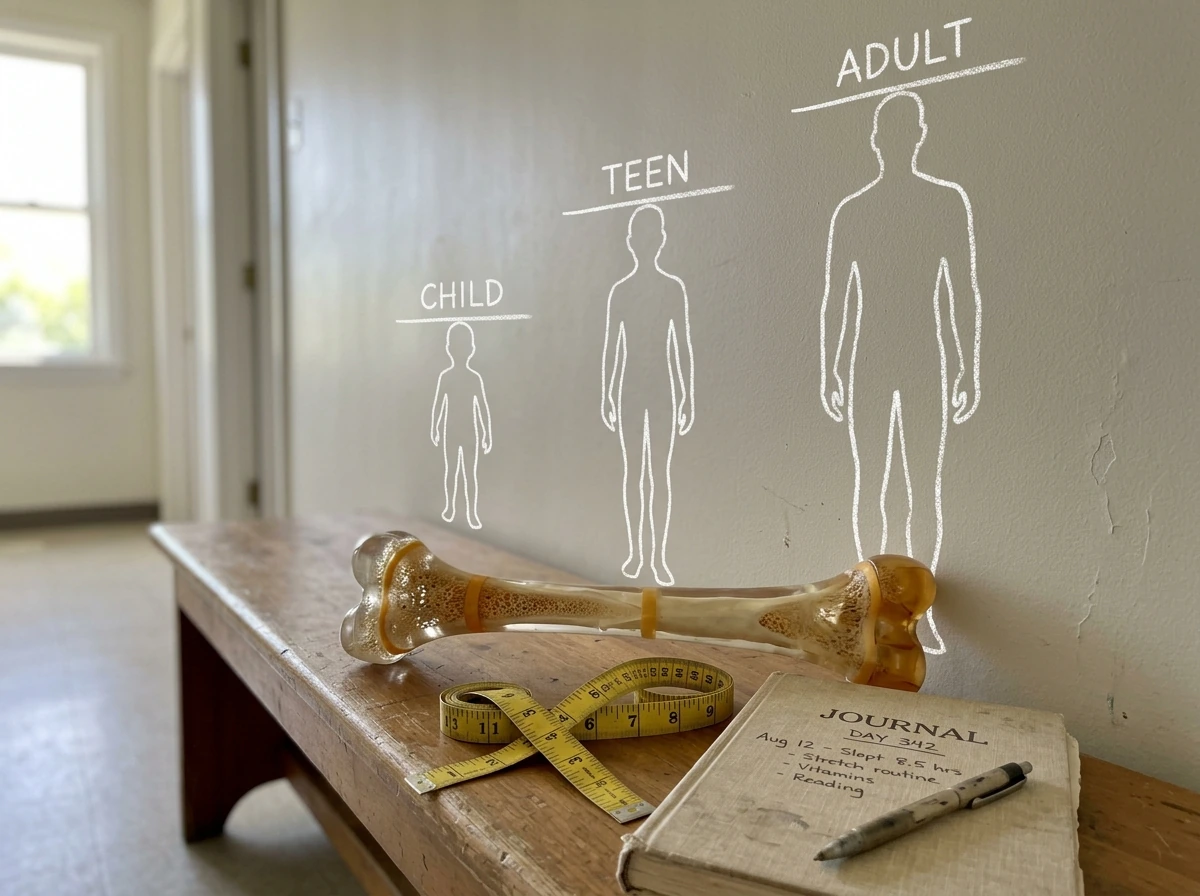
Most of your height growth happens between birth and your late teens, with the most dramatic gains packed into two main windows: early childhood and the puberty growth spurt. If you're trying to figure out whether you're still growing, or just want to understand the timeline, the short answer is this: children grow steadily through childhood, hit a major acceleration during puberty, and then slow down and stop once the growth plates in their bones close, usually by the late teens to early twenties. Everything after that is maintenance, not growth.
When Do You Grow Taller? Ages, Puberty, and Growth Timeline

Marcus Reeves
24 Mar 2026

The typical age ranges when height growth happens
Height growth isn't evenly spread across childhood. It comes in phases, and knowing those phases makes the whole picture a lot clearer.
Infancy and early childhood (birth to around age 5)

This is actually the fastest growth period of your life, even faster than puberty. Babies can grow 25 cm (about 10 inches) in their first year alone. Growth slows through toddlerhood but stays rapid compared to the school years. By age 2, most children have reached roughly half their adult height.
Middle childhood (ages 5 to puberty onset)
Once the early childhood boom settles, kids enter a steadier phase. Most children gain about 5 to 6 cm (2 to 2.5 inches) per year through the elementary school years. It's consistent but not dramatic. This is the quiet period before puberty rewrites everything.
The puberty growth spurt (the big one)

This is when height growth really accelerates. The average takeoff age (the point where growth starts noticeably speeding up) is around age 9 in girls and age 11 in boys. Peak height velocity, the fastest single rate of growth, hits at approximately age 11.5 in girls and 13.5 in boys. At that peak, girls are gaining around 8 to 9 cm per year and boys are gaining around 10 to 10.5 cm per year. Those are real numbers from longitudinal growth studies, not rough estimates.
Late teens and the slowdown
After peak height velocity, growth tapers off. Most girls finish growing between ages 15 and 17. Most boys finish between ages 17 and 19. A small number of people, typically late developers, continue to add small amounts of height into their early twenties, but that's the exception rather than the rule.
How puberty changes the growth timeline (and why timing varies)
Puberty doesn't start on a fixed schedule, and that's the biggest source of variation in when people grow. Puberty is triggered by hormonal signals, primarily growth hormone, insulin-like growth factor 1 (IGF-1), and sex hormones like estrogen and testosterone. These hormones drive the acceleration of bone growth at areas called growth plates, which are cartilage zones near the ends of long bones like the femur and tibia.
Girls typically enter puberty between ages 8 and 13. Boys typically enter between ages 9 and 14. That's a wide window, which is exactly why some kids tower over classmates at 12 while others are still waiting for their spurt at 15. Both situations can be completely normal.
One thing that often surprises people: girls tend to start their spurt earlier than boys, but boys' spurts are more intense and last longer, which is why adult men are on average taller than adult women. It's not that boys grow for more years overall, it's that they get a higher peak and a longer runway before the growth plates fuse.
Estrogen, in particular, plays a double role: it drives the initial growth spurt but also speeds up the fusion of growth plates, eventually ending growth. This is true in both sexes. Boys have more time before estrogen levels rise high enough to close the plates, which contributes to their greater final height on average.
| Growth milestone | Girls (average) | Boys (average) |
|---|---|---|
| Growth spurt takeoff age | ~9 years | ~11 years |
| Peak height velocity age | ~11.5 years | ~13.5 years |
| Peak height velocity rate | ~8–9 cm/year | ~10–10.5 cm/year |
| Growth typically finishes | Ages 15–17 | Ages 17–19 |
| Growth plates usually fused by | Late teens | Early to mid twenties (latest) |
Why some people grow taller than others: genetics and biology
Genetics is the single biggest determinant of how tall you'll be. Studies on twins consistently show that around 60 to 80 percent of the variation in adult height is hereditary. That means your parents' heights are a reasonably good predictor of yours. A rough clinical formula called mid-parental height adds both parents' heights together, adjusts by a few centimeters depending on the child's sex, and divides by two to get a target range. It's not a guarantee, but most people land within about 8 to 10 cm of that target.
Beyond general inheritance, hundreds of individual gene variants each contribute small amounts to final height. There's no single "tall gene," which is part of why height doesn't always follow an obvious family pattern. You can have tall parents and still fall toward average if you inherited a particular combination of variants.
Hormonal biology also plays a role independent of puberty timing. Growth hormone deficiency, for instance, can significantly limit height if untreated, and conditions like hypothyroidism or Cushing's syndrome affect growth through their downstream effects on metabolism and bone development. These are medical situations, not lifestyle issues, and they require a doctor's involvement. On the other end, conditions that cause early puberty (precocious puberty) can actually result in shorter adult height because the growth plates fuse too soon, even though the child may be temporarily tall for their age.
Lifestyle factors that actually support growth
Genetics sets the ceiling, but lifestyle factors during the growth years can help you reach it, or fall short of it if those factors are seriously lacking. The evidence here is fairly clear on what matters and what doesn't.
Nutrition
Adequate nutrition during childhood and adolescence is non-negotiable for reaching your genetic height potential. Protein is critical for building the bone matrix and supporting IGF-1 production. Calcium and vitamin D are essential for bone mineralization. Zinc deficiency is specifically linked to growth stunting in children. The key word here is deficiency: if you're well-nourished, adding extra protein shakes or calcium supplements won't make you taller than your genes allow. But genuine nutritional shortfalls during the growth years can meaningfully reduce final height, which is why malnutrition remains one of the leading causes of short stature globally.
Sleep

Growth hormone is released primarily during deep sleep, particularly in the slow-wave stages. This isn't a minor detail. Children and teenagers who consistently get insufficient sleep may be blunting a key hormonal signal for growth. School-age children need 9 to 11 hours per night; teenagers need 8 to 10 hours. Chronic sleep deprivation during the growth years isn't just bad for energy, it may genuinely affect how much growth happens.
Physical activity and exercise
Regular physical activity supports healthy growth through several mechanisms: it stimulates growth hormone release, supports bone density, and maintains the body composition that's healthy during development. Weight-bearing activity and sports are especially beneficial during the growing years. There's no good evidence that specific exercises make you grow taller beyond your genetic range, but staying active supports the conditions where growth can happen optimally. One important caveat: extremely high-intensity training in young athletes, particularly in gymnastics and endurance sports, has been associated with delayed puberty and reduced growth in some cases, likely through energy and hormonal stress. Moderation and adequate fueling matter.
Overall health
Chronic illness during childhood and adolescence can interfere with growth. Conditions like celiac disease, inflammatory bowel disease, poorly controlled asthma, kidney disease, and others can impair growth by affecting nutrient absorption, increasing metabolic demands, or disrupting hormonal signaling. Long-term use of corticosteroids (common in treating asthma and inflammatory conditions) is also associated with reduced growth velocity. Identifying and treating underlying health conditions is one of the most impactful things a growing child or teenager can do for their height potential.
How to tell if you're still growing
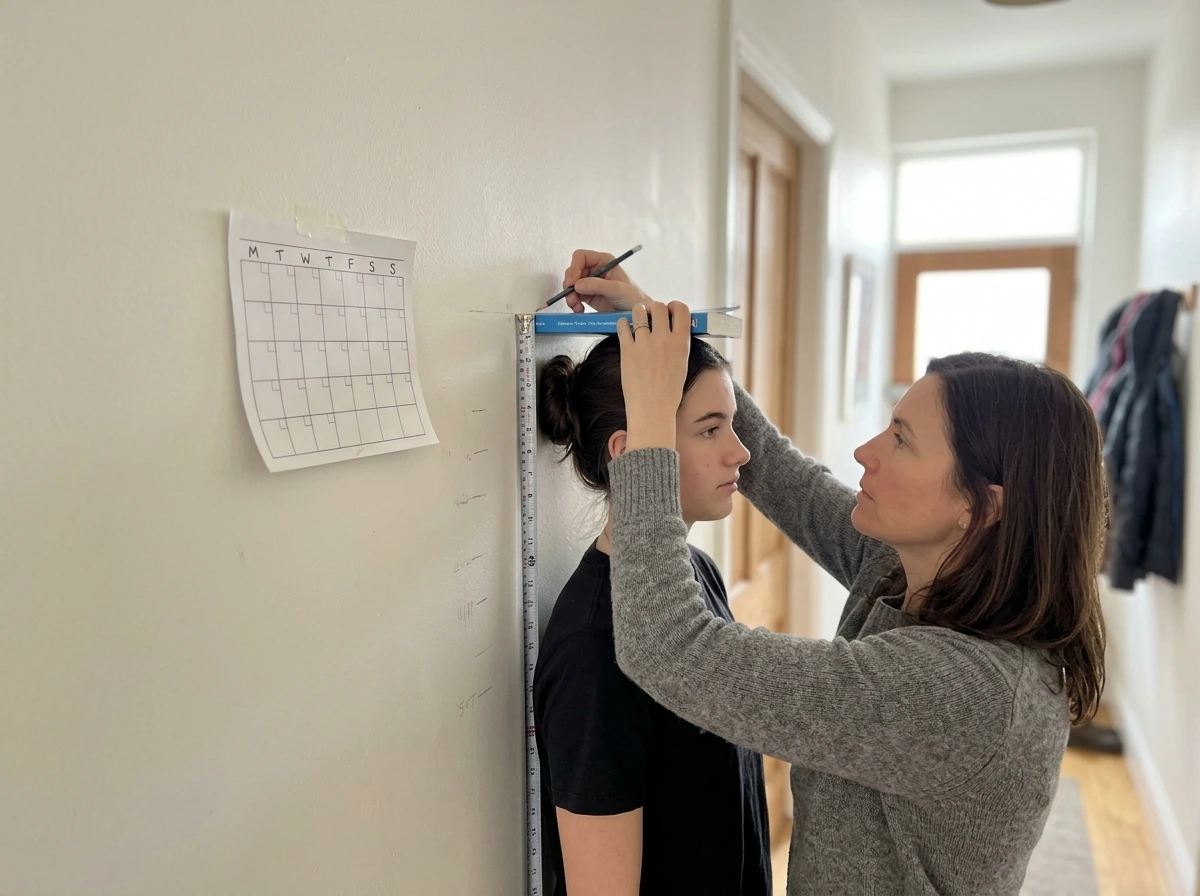
The most reliable way to know if you're still growing is to track it directly: measure your height every three to six months under consistent conditions (same time of day, same wall, no shoes). If you're gaining measurable height, you're still growing. If measurements have been flat for 12 or more months, you've likely stopped or are very close to done.
Beyond tracking, there are biological signals worth knowing. Your position in puberty is a strong indicator. Puberty is typically staged using the Tanner scale, which goes from stage 1 (prepubertal) to stage 5 (full adult development). Most height growth happens in Tanner stages 2 through 4. By Tanner stage 5, growth is nearly complete. If you're uncertain about your pubertal stage, a doctor can assess it.
The definitive test is an X-ray of the hand and wrist to assess bone age and growth plate status. Growth plates (also called epiphyseal plates) are visible as gaps on the X-ray while they're still open. Once they fuse and close, linear height growth is finished. A radiologist can estimate bone age from this X-ray and compare it to chronological age, which also helps identify whether someone is a late developer with growth potential still ahead, or whether plates are already fusing.
- Consistent height measurements over 6 to 12 months: still gaining = still growing
- Tanner stage: stages 2 to 4 = active growth likely; stage 5 = growth nearly complete
- Bone age X-ray: open growth plates = growth possible; fused plates = growth finished
- Age as a rough guide: if you're under 16 (girls) or under 18 (boys), there's a reasonable chance you have some growth remaining, especially if puberty started later
What you can realistically do now, and what won't work
If you're still in the growth window (open growth plates, active puberty), there are meaningful things you can do to support reaching your genetic potential. If your plates are already fused, the honest answer is that height is essentially fixed, and the focus shifts to posture, strength, and health instead.
What actually helps during the growth years
- Eat enough: prioritize protein (meat, fish, dairy, legumes), calcium-rich foods, and get adequate vitamin D, either from sunlight or diet. Don't crash diet or severely restrict calories during adolescence.
- Sleep consistently: aim for 8 to 10 hours per night as a teenager. This is when growth hormone does much of its work.
- Stay active: weight-bearing sports and regular exercise support growth hormone release and bone health. Don't over-train to the point of disrupting your menstrual cycle (girls) or showing signs of hormonal suppression.
- Treat underlying health issues: if you have a chronic condition that might be affecting growth, work with a doctor to manage it effectively.
- Avoid growth suppressors: smoking, alcohol, and anabolic steroids during adolescence can all negatively affect growth, with steroids being particularly risky because they can accelerate plate fusion and permanently reduce final height.
What the evidence doesn't support
A few things come up constantly and are worth addressing directly. Stretching and hanging exercises don't make your bones longer. They might temporarily decompress the spine, adding a centimeter or two of height that you lose again by evening, but they don't stimulate growth plate activity. Height supplements and "grow taller" pills are not supported by any credible evidence in well-nourished people. If you're dealing with the opposite question, what makes you grow shorter, the causes are usually about health, puberty timing, or growth plates closing. If you're not deficient in any specific nutrient, supplementing more of it won't add height. Posture improvement is real and worth pursuing, but it reveals existing height rather than creating new height. And for adults with fused growth plates, none of the above changes bone length. The only evidence-based interventions for increasing height in adulthood are surgical (limb lengthening procedures), which carry serious risks and are typically reserved for medical necessity. what makes a person grow taller. can you grow smaller
If you're an adult wondering about height
Once growth plates are fused, height is set. The focus for adults shifts to maintaining it. Spinal compression from poor posture, weak core muscles, and disc dehydration can make you measure shorter over time. Strength training, good posture, staying hydrated, and avoiding prolonged inactivity all help preserve the height you have. There's also solid evidence that height loss in older adults (from disc thinning and vertebral changes) can be slowed with regular weight-bearing exercise and adequate calcium and vitamin D intake.
When to talk to a doctor about growth
Most variation in height and growth timing is completely normal. But some situations genuinely warrant a medical evaluation, and catching them early makes a real difference because many growth-related conditions are much more treatable during the active growth window.
- A child's height is consistently below the 3rd percentile on standard growth charts, or is dropping significantly across percentile lines over time
- Growth has clearly stalled: less than 4 to 5 cm of height gain per year during childhood (outside of puberty)
- Puberty hasn't started by age 13 in girls or age 14 in boys (possible delayed puberty)
- Puberty is showing signs before age 7 or 8 in girls, or before age 9 in boys (possible precocious puberty, which can limit final height)
- A child or teen was growing normally and then significantly slowed down without an obvious explanation like illness
- You suspect a chronic health condition (gut issues, thyroid symptoms, fatigue, weight changes) that might be interfering with growth
- A teenager who is a late developer wants to assess whether growth is still possible (a bone age X-ray can answer this)
The specialist to see is typically a pediatric endocrinologist. They can assess growth hormone levels, bone age, pubertal stage, and rule out or diagnose conditions that affect growth. Growth hormone therapy, for example, is an effective intervention for children with confirmed growth hormone deficiency, but it needs to be started while the growth plates are still open to have any effect. Waiting until growth is finished means the window has closed.
If you're a teenager or young adult and you're just curious about whether you have any growth left, a conversation with your regular doctor and possibly a bone age X-ray can give you a concrete answer. That's far more useful than tracking supplements or guessing based on age alone.
FAQ
How much height change is considered normal between measurements?
For most kids and teens, a small change year to year can be measurement noise. If you measure every 3 to 6 months under the same conditions and you see a clear upward trend across at least two time points, that usually means growth is active. If the numbers are flat or bounce around by the same small amount, repeat using the same time of day (many people are taller in the morning) and same shoe-free method.
If my height hasn’t changed in a few months, does that mean I’m done growing?
Not necessarily. Growth spurts can be uneven, and growth plates activity can pause briefly between phases of puberty. The practical rule in the article, flat for 12 or more months, is a better cutoff than a few months, unless a clinician is already evaluating delayed or early puberty.
Why do I seem taller in the morning or after stretching?
Those changes are mostly due to spinal compression and fluid shifts, not longer bones. Decompression from posture changes or temporary relief can make you measure a bit taller at one time, but the effect typically reverses by evening. To track growth accurately, measure at consistent times, ideally morning, and avoid doing posture routines right before measuring.
Can I grow taller if I start eating better or exercising now?
You can potentially support growth if you correct a real deficiency or energy shortfall. If you are already well-nourished and not dealing with an underlying medical issue, lifestyle changes are unlikely to push you beyond your genetic height range. The biggest payoff is usually in cases like inadequate protein/calcium intake, chronic illness, poor sleep, or very high training load with low fueling.
Does gaining weight make you taller?
Weight gain itself does not lengthen bones. However, healthy weight gain can help if you were under-fueled, because the body needs energy and nutrients for normal puberty timing and growth. If weight gain is from inactivity and poor nutrition, it might not help growth and can complicate training and sleep.
Is it possible to be a late developer and still gain noticeable height?
Yes. Late puberty is one reason some people continue adding height into the late teens, and a smaller group can gain a little into the early twenties. Bone age testing is often the clearest way to estimate how much growth plate activity is left, rather than relying only on age or classmate comparisons.
What red flags suggest I should see a pediatric endocrinologist?
Consider evaluation if growth velocity is consistently low (for example, very little height gain over a year despite good measurement), puberty seems markedly early or late compared with peers, or there are symptoms suggesting hormonal or systemic illness (fatigue, GI symptoms, chronic steroid use, or other health concerns). Early assessment matters because some treatable conditions work best while growth plates remain open.
Does hormone therapy or growth hormone help for people who are just naturally short?
Growth hormone is not a general “height supplement.” It helps only for specific medical indications, most importantly confirmed growth hormone deficiency or certain other diagnoses. For a child with normal growth hormone and open growth plates, the right approach is usually identifying nutritional gaps, sleep problems, or other conditions, rather than starting hormones.
Can braces, posture training, or “spine decompression” increase my height permanently?
They can change how you measure by improving posture or alignment, but they do not create new bone length. For kids and teens, there is also a chance that improved posture simply reveals existing height more consistently. Permanent height gain in adulthood requires bone-lengthening surgery, which the article notes is high-risk and typically reserved for medical necessity.
How do I measure my height correctly at home for tracking?
Use the same method each time: no shoes, back against a wall, heels together, head in a neutral position, and measure to the same spot on the wall. Choose a consistent time of day, since many people are taller in the morning due to spinal fluid and compression differences. Measuring every 3 to 6 months with consistency matters more than frequent spot checks.
If I already had puberty, can I still grow?
Often, yes, especially if puberty is not finished and growth plates are still open. The key detail is where you are in puberty staging and whether growth plates are fusing. If you want a concrete answer, a bone age X-ray can estimate the remaining growth potential more accurately than guessing from whether puberty started.
Next Article
What Makes You Grow Taller: Science, Habits, and Myths
Learn what truly makes you grow taller, science of growth plates and puberty, plus diet, sleep, exercise, myths, and adu