
Here's the direct answer: drinking milk every day can support normal height growth if you're still growing and your diet is missing key nutrients, but it won't push you past your genetic ceiling or add inches after your growth plates have closed. Milk is genuinely useful nutrition, not a height hack. Whether it helps you depends almost entirely on your age, your current diet, and how much growing you have left to do.
Will I Grow Taller If I Drink Milk Every Day?

Marcus Reeves
24 Mar 2026
What actually controls how tall you get
Before evaluating milk, you need to understand what's running the show. Height is primarily determined by genetics, and estimates consistently place the genetic contribution at around 60 to 80 percent of your final adult stature. Your parents' heights are your single best predictor, not your diet. That said, nutrition, sleep, and overall health determine whether you actually reach the top of your genetic range or fall short of it.
The physical mechanism of height growth is the growth plate, also called the epiphyseal plate. These are thin cartilage zones near the ends of your long bones, like the femur and tibia, where new bone tissue is produced. As long as your growth plates are open, your bones can lengthen and you can grow taller. When they close, linear growth stops permanently, regardless of what you eat.
Growth plate closure is driven largely by hormones, not calendar age. Estrogen in particular is essential for initiating the pubertal growth spurt and then for triggering closure of the growth plates at the end of puberty. This is why girls typically finish growing earlier than boys: they experience estrogen-driven closure sooner. The timing varies significantly between individuals, which is why two 15-year-olds can be at completely different stages of growth. Research confirms that by the time puberty begins, about 87 percent of your final adult height is already in place. The pubertal growth spurt adds the remaining slice, and then the plates close and the window shuts.
After closure, no food, supplement, or exercise program will make your bones longer. This is not a matter of debate in the research. Longitudinal bone growth ends via a well-characterized process called growth plate senescence, and it's irreversible.
What milk actually does for height, and what it can't do
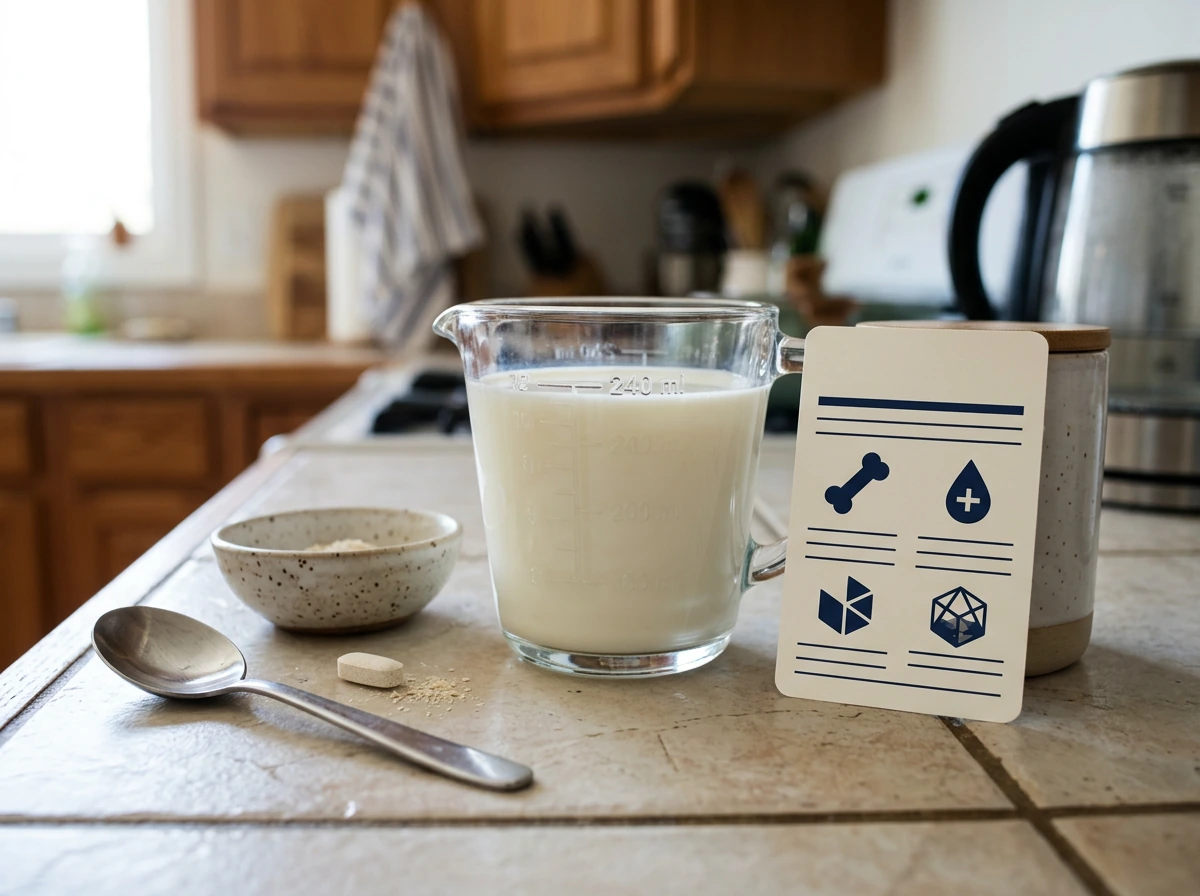
Milk is a genuinely nutritious food. An 8-ounce (240 ml) cup of whole milk delivers roughly 8 grams of protein, about 300 mg of calcium, and, if fortified (which most commercial milk in the US is), around 100 IU of vitamin D. It also contributes meaningful calories and small amounts of zinc, phosphorus, and B vitamins. All of these nutrients play roles in bone development and overall growth, so the logic connecting milk to height isn't wrong, it's just incomplete.
The research on milk and height shows a real association in children who are undernourished or living in low-income settings where dairy is scarce. In those contexts, adding milk to the diet does correlate with better growth outcomes. But that's a nutrition deficiency story, not a milk magic story. When you look at well-nourished kids in countries with high dairy consumption, the effect of drinking more milk on height essentially disappears. Once your nutritional needs are already met, adding more milk doesn't give you more height.
What milk cannot do: override your genetics, extend the period your growth plates stay open, or add any height after those plates have closed. There's no credible research showing that any amount of milk consumption increases adult height beyond what good overall nutrition would achieve.
When milk helps most: kids vs. teens vs. adults
Age matters enormously here, so let's break it down clearly.
Children (roughly ages 2 to 10)

This is where milk has its clearest case. Young children are building bone rapidly, their protein needs relative to body weight are high, and they're often picky eaters who might not get enough calcium or vitamin D from other sources. Meeting the recommended 2 to 2.5 cups of dairy per day in this age group genuinely supports the bone-building process during the years when growth is steady and the foundation for peak bone mass is being laid. Under-nutrition in childhood is the most reliable way to fall short of your genetic height potential, so making sure kids are eating and drinking enough of the right things matters.
Teenagers (puberty through late teens)
Teens experiencing their growth spurt have the highest calcium needs of any life stage: 1,300 mg per day is the current recommended intake. Three cups of milk covers that almost entirely. This is also when hormonal changes are driving rapid bone accrual, and estrogen and growth hormone are both active. If a teen is consistently short on calcium, protein, or total calories during this window, there's a real risk of not reaching full genetic height potential. Milk can help close that gap. But if a teen is already eating reasonably well, adding extra milk beyond daily needs is unlikely to produce measurable additional height.
Adults (growth plates closed)
For adults, [milk will not make you taller](/hydration-for-growth/milk-can-grow-taller). Once your growth plates have closed, which typically happens in the late teens for girls and early-to-mid twenties for boys (with a lot of individual variation), your bones cannot grow longer. Milk remains a healthy food for adults for reasons like bone density maintenance, muscle protein, and cardiovascular considerations depending on type, but height is simply off the table. Any product or claim suggesting otherwise is not supported by evidence.
How to drink milk in a way that actually supports growth

If you're in a growth window and want to use milk strategically, here's how to approach it practically.
- Aim for 2 to 3 cups (480 to 720 ml) per day for children and teens, which aligns with standard dietary guidelines and covers most of the daily calcium target.
- Choose whole milk for younger children (under age 2, always whole milk; ages 2 to 5, whole or 2% depending on overall diet and weight trajectory as advised by a pediatrician).
- For school-age kids and teens, low-fat (1% or 2%) milk is a reasonable default that still delivers the same calcium and protein with fewer saturated fat calories.
- Pair milk with vitamin D: milk is often fortified, but many kids and teens are still deficient. Getting some sun exposure or a vitamin D supplement alongside dietary sources helps the calcium actually absorb and do its job.
- Spread intake across the day rather than drinking it all at once. Calcium absorption is more efficient in smaller doses.
- If you're lactose intolerant, you don't have to force it. Lactase enzyme supplements, lactose-free milk, or fortified plant milks (oat, soy, or almond) can cover the same nutritional bases. Check labels: soy milk fortified with calcium carbonate and vitamin D is the closest nutritional match to cow's milk among plant options.
One thing worth emphasizing: milk works best as part of a complete diet. It's not a substitute for adequate total calories, varied protein sources, vegetables, and whole grains. Kids or teens who are eating too little overall won't be rescued by milk alone.
Other evidence-based levers for height potential
Milk is one piece of a much bigger picture. Here are the other factors that research consistently links to reaching your height potential, ranked roughly by impact.
Total calorie intake
Chronic under-eating is the number one nutritional cause of stunted growth in children worldwide. Your body will prioritize survival over growth if calories are consistently too low. Kids and teens need enough energy to support both normal activity and the energy demands of growing. This sounds obvious but is often overlooked in households where portion sizes are restricted for various reasons, or in teens who are dieting.
Protein
Protein provides the amino acids your body uses to build and repair bone matrix, muscle, and connective tissue. Studies in low-income populations have shown that protein supplementation in children improves linear growth. The recommended intake for growing children is roughly 0.85 to 1.0 grams per kilogram of body weight per day; teens during puberty benefit from the higher end of this range. Good sources beyond milk include eggs, poultry, fish, legumes, and soy.
Sleep

This one is underappreciated. Growth hormone is secreted in pulses, and the largest pulse occurs during slow-wave (deep) sleep. Children and teens who are chronically sleep-deprived have blunted growth hormone release. The recommendation is 9 to 12 hours for school-age children and 8 to 10 hours for teenagers. This isn't about one bad night; it's about consistent, quality sleep over months and years during the growth period.
Physical activity
Weight-bearing exercise stimulates bone formation and helps maintain the hormonal environment that supports growth. Activities like running, jumping, and sports that involve impact are particularly beneficial for bone density in growing children. There's also a posture component worth mentioning: while exercise won't make your bones longer, improving posture through core strengthening and flexibility can help you stand at your full height rather than losing an inch or two to habitual slouching.
Managing illness and chronic conditions
Recurrent infections, untreated celiac disease, poorly controlled asthma requiring high-dose corticosteroids, and other chronic health issues can all impair growth by diverting energy, disrupting hormone signaling, or impairing nutrient absorption. If a child is growing slowly, the first question isn't about diet, it's about whether there's an underlying health issue that needs addressing.
Common myths worth putting to rest
There are a lot of misleading claims in this space. Here are the ones that come up most often and what the evidence actually says.
| The Claim | The Reality |
|---|---|
| Drinking more milk will make you taller | Only if you're deficient in what milk provides. Once nutritional needs are met, more milk does not add more height. |
| Calcium supplements will boost height | Calcium supplements have not been shown to increase adult height in well-nourished individuals. They help prevent deficiency, nothing more. |
| Adults can grow taller with the right diet or supplements | No. Once growth plates are closed, no diet or supplement can lengthen bones. Claims to the contrary are not supported by science. |
| Stretching or hanging exercises add permanent height | These can temporarily decompress the spine and improve posture, but they don't create new bone growth. Any gain is not structural. |
| Growth hormone supplements sold online will make you taller | Over-the-counter 'growth hormone boosters' are not regulated and have no credible evidence of increasing height. Actual growth hormone therapy requires a diagnosis and medical supervision. |
| Strawberry or chocolate milk works better than plain milk | The flavoring doesn't change the calcium or protein content meaningfully. Flavored milks often have added sugar and no growth advantage. |
A note on the supplement industry specifically: there are many products marketed toward parents of short children or toward teens who want to be taller. Almost none of these have peer-reviewed clinical evidence behind them. The mechanism that would allow them to work, keeping growth plates open or creating new bone length, doesn't exist in human physiology once development has progressed past a certain point.
Practical next steps based on where you are right now
What you should actually do depends on your age and situation. Here's how to think about it.
If you're a parent of a young child
Focus on consistent, adequate nutrition across the whole diet, not milk specifically. Make sure your child is eating enough total calories, getting enough protein from varied sources, sleeping the recommended hours, and staying active. Milk or a fortified alternative is a convenient way to cover calcium and vitamin D, but it's one part of the picture. If your child seems to be growing more slowly than peers or has dropped significantly on their growth curve at checkups, talk to your pediatrician. A growth curve review is the most useful tool for catching issues early.
If you're a teenager still growing
Estimate your height potential using the mid-parental height formula: for boys, add your parents' heights in inches, add 5 inches, then divide by 2. For girls, add your parents' heights, subtract 5 inches, then divide by 2. This gives a rough range (usually plus or minus 2 inches) of your expected adult height. Your job now is to not fall short of that range by under-eating, sleeping poorly, or avoiding physical activity. Two to three cups of milk or a fortified equivalent per day covers your calcium needs. Prioritize sleep above almost everything else for growth. If your growth seems to have stalled unexpectedly or you have concerns about your development, a visit to your doctor for a growth assessment and possibly a bone age X-ray can tell you whether your plates are still open and how much growing is left.
If you're an adult
Height increase is not on the table physiologically. What you can do is make sure you're standing at your full height, which means working on posture, core strength, and spinal health. Chronic slouching, tight hip flexors from sitting, and weak core muscles can make you appear and measure shorter than you actually are. Yoga, Pilates, and basic strength training can genuinely help with this. Beyond that, drink milk because it's a nutritious food, not because it will make you taller.
If you're genuinely concerned about your height or your child's growth trajectory, the most useful thing you can do is get a proper assessment rather than experimenting with diet changes alone. A pediatric endocrinologist can evaluate growth velocity, check for nutritional deficiencies, assess bone age, and determine whether there's anything medically actionable. That's a much more reliable path than relying on a single food, no matter how nutritious it is.
FAQ
I’m done growing, so is milk totally useless for height or bones?
If you are an adult whose growth plates have closed, milk will not increase height, but it can still help bone health. Focus on meeting calcium and vitamin D needs (for example, many adults aim for about 1,000 to 1,200 mg calcium per day depending on age and sex) and avoid using milk to “make up” for poor sleep or low overall protein intake.
How much milk should a teen drink to maximize height potential?
For teens, the key is adequacy, not “more.” If you already get enough protein, total calories, and calcium from your overall diet, adding extra milk usually will not produce measurable additional height, though it may slightly improve nutrient intake if you were previously short. A practical approach is to hit the daily calcium target first (using 2 to 3 cups of milk or fortified alternatives) and then reassess.
If someone barely drinks milk, can starting now increase their final height?
Yes, but only if the baseline diet is deficient. In children or teens who are undernourished, dairy intake often raises total protein, calcium, and vitamin D, which can support normal growth. If nutrition is already adequate, switching from low dairy to regular dairy typically will not add extra inches beyond expected growth.
What if I drink milk but I’m still not eating enough overall?
Milk can help you meet nutrient needs, but it cannot compensate for overall under-eating. If calories are consistently low, the body may prioritize energy needs over growth, and growth velocity can drop. If milk is being added while someone is dieting or skipping meals, height outcomes may not improve.
Will fortified non-dairy milk help with height the same way as dairy milk?
Fortified milk alternatives can work similarly for calcium and vitamin D, but check the label. Many alternatives differ widely in protein, calcium amount per serving, and whether vitamin D is added. Choose one with protein close to milk and at least substantial calcium and vitamin D, then track total daily intake.
My child’s height percentile dropped, could milk fix it or should we check something else?
If growth has stalled or your child’s height percentile drops at checkups, don’t assume it is “just genes.” Ask the pediatrician to review growth velocity, nutrition, and any red flags for conditions that can impair growth, such as celiac disease or chronic inflammatory issues, and consider whether bone age testing is appropriate.
Can drinking too much milk be harmful or still increase height?
Too much calcium from any source is not automatically helpful, and very high intakes can cause side effects like constipation or interfere with absorption of other minerals. A safer strategy is to meet, not exceed, recommended ranges, and avoid stacking multiple calcium supplements unless a clinician advises it.
Is there a best time in the day to drink milk for growth?
The most useful “timing” is developmental stage. Milk supports growth when growth plates are open and nutrient intake is insufficient, but after closure it will not restart linear growth. If you are uncertain, a doctor can evaluate bone age to estimate whether you still have remaining growth potential.
If milk won’t lengthen bones, can exercise still make me look taller?
Exercise will not make bones longer, but it can support posture and bone density. For practical height appearance, programs that improve core strength and flexibility (plus consistent sports or weight-bearing activity) can reduce slouching, so you may measure slightly taller even though true bone length does not change.
I can’t drink milk daily, is it still worth it for growth-related nutrition?
Inconsistent intake is usually not a major problem as long as weekly averages meet nutrient needs. However, milk alone is not enough if sleep is poor, protein is low, or total calories are inadequate. If you are aiming to “use milk strategically,” pair it with regular meals, protein sources at most meals, and consistent sleep.
Next Article
Does Soy Milk Make You Grow Taller? Evidence and Tips
Soy milk won’t make you taller directly, but it can support growth if fortified and you meet protein, calcium, vitamin D